
Adaptive Data Fusion | About
Thank you for reading this post, don't forget to subscribe!Human-centered AI adoption deserves its own intelligence layer.
Adaptive Data Fusion exists to help organizations understand and enable AI adoption in ways that are measurable, meaningful, and grounded in human behavior. Rather than focusing only on tools, we focus on the organizational conditions that shape whether AI becomes integrated into real work.
To make AI adoption more observable, interpretable, and actionable across organizations.
Adaptive Data Fusion is a human-centered AI adoption company grounded in behavioral science, industrial-organizational psychology, and practical implementation strategy. The goal is not simply to help organizations deploy AI, but to help them understand how adoption is actually taking shape across leadership, workflows, and daily work.
That means creating a stronger way to interpret organizational readiness, user confidence, learning climate, workflow integration, and support conditions—so implementation decisions can be made with greater clarity and less guesswork.
AI adoption is not only a technology question.
Many organizations can track rollout activity—licenses, launches, training sessions, and platform access. Fewer have a structured way to understand how AI is actually being received, integrated, supported, and sustained in everyday work.
Adaptive Data Fusion was built to close that gap. Its premise is simple: organizations need a clearer lens into the human and organizational side of AI adoption, not just the technical side of implementation.
This is the foundation of AI Adoption Intelligence: a measurable way to understand the conditions that shape whether AI becomes meaningfully integrated over time.
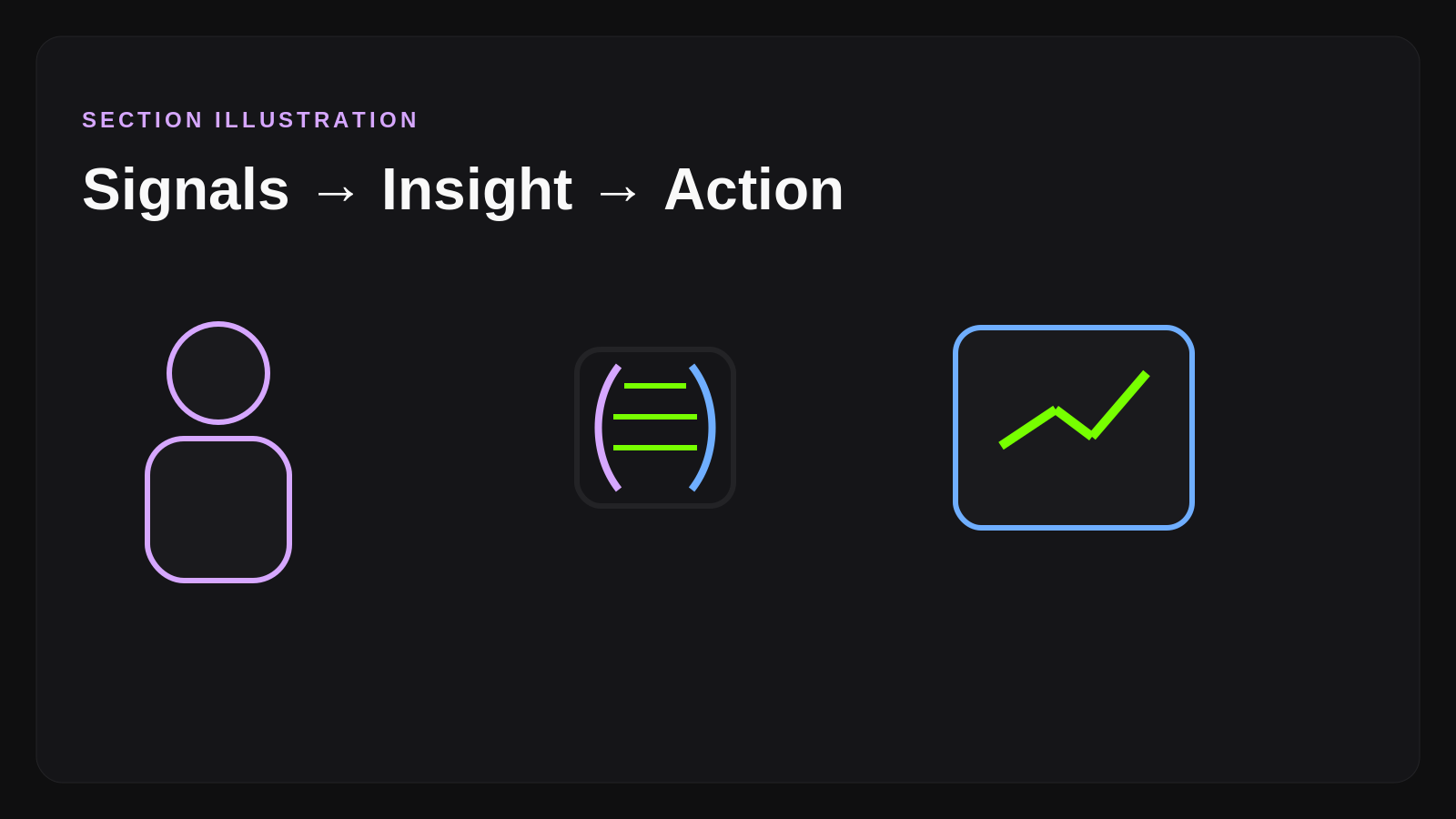
A behavioral, research-grounded view of AI adoption.
Adaptive Data Fusion is built around the idea that organizational AI adoption can be interpreted more clearly when behavioral science, implementation logic, and system design are brought together rather than treated separately.
Human-centered by design
Adaptive Data Fusion focuses on how people, workflows, and leadership conditions shape AI adoption rather than treating implementation as a purely technical event.
Research-informed
The company is grounded in industrial-organizational psychology, technology adoption theory, motivation science, and broader behavioral research rather than generic innovation language alone.
Built for practical interpretation
The goal is to help organizations move from scattered signals and assumptions toward a clearer understanding of what is shaping AI adoption and what should happen next.
A connected pathway from signal to strategy to system.
Adaptive Data Fusion is designed as an ecosystem rather than a single page or tool. Each part of the experience helps organizations move from initial understanding toward a more structured implementation pathway.
Assessment
The AI Adoption Assessment provides an initial baseline for understanding how leadership, workflow, confidence, and support conditions are shaping adoption.
Ignition
The Ignition Program translates those signals into a more structured advisory engagement, helping organizations align priorities and clarify next steps.
Nexus
Nexus extends that logic into a more continuous system for AI Adoption Intelligence, helping organizations interpret patterns and support implementation over time.
Derrick Bass
Adaptive Data Fusion was founded by Derrick Bass, an industrial-organizational psychology scholar-practitioner whose work focuses on how organizations can create stronger conditions for AI adoption.
Derrick’s background combines behavioral science, organizational alignment, and practical implementation thinking. His work is grounded in industrial-organizational psychology and shaped by a sustained focus on how leadership, readiness, and human behavior influence AI adoption outcomes within organizations.
That perspective informs the direction of Adaptive Data Fusion: rigorous enough to be research-grounded, but practical enough to help organizations move from concept to implementation with greater clarity.
Academic and applied foundation
Industrial-Organizational Psychology has long been concerned with the relationship between people, work systems, leadership, motivation, and organizational effectiveness. Adaptive Data Fusion applies that lens to one of the most important implementation questions facing organizations today: how AI becomes part of everyday work.
Rather than separating technical adoption from human behavior, the company was built on the premise that those dynamics must be interpreted together.
The principles that shape the work.
Adaptive Data Fusion is guided by a simple orientation: human-centered AI adoption should be measurable, strategically useful, and aligned with how organizations actually function.
Clarity over hype
The goal is to help organizations interpret implementation conditions more clearly, not add more abstraction or noise.
Human capability matters
AI adoption should support stronger work, greater understanding, and better organizational alignment rather than reducing people to adoption metrics alone.
Implementation deserves measurement
Organizations need a stronger way to understand whether AI adoption is becoming meaningful, sustained, and practical across real workflows.
Begin with a clearer view of organizational AI adoption.
Start with the AI Adoption Assessment to establish an initial baseline, or explore the Ignition Program if you are already looking for a more structured implementation conversation.